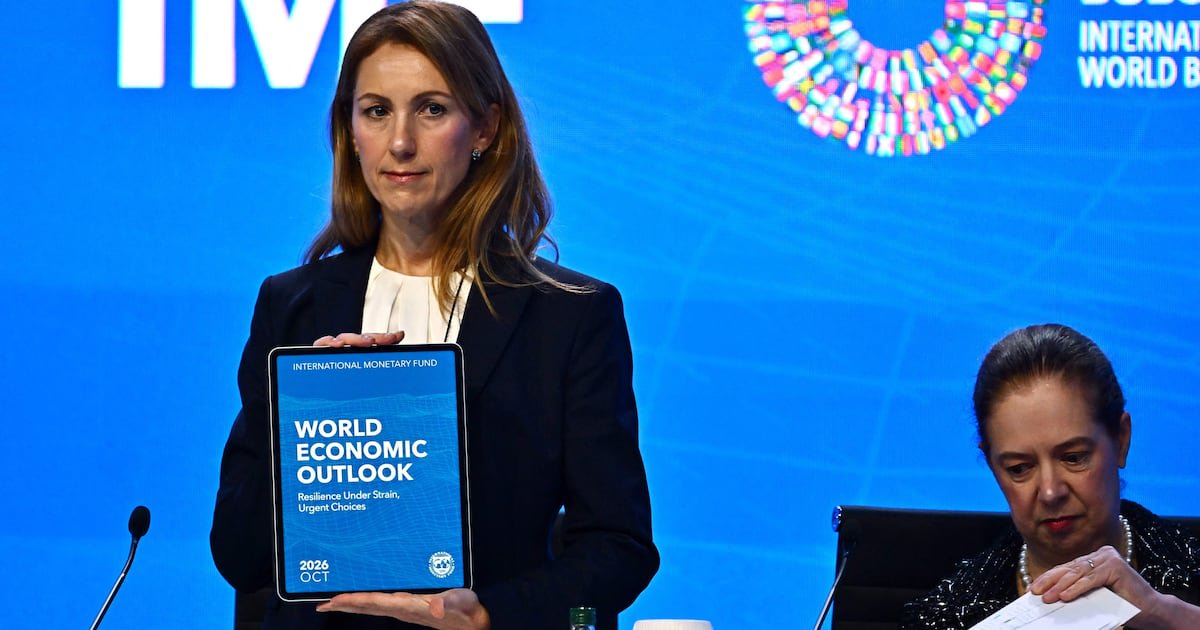
The International Monetary Fund has sharply revised down its 2026 growth outlook for the Middle East and North Africa, citing the prolonged closure of the Strait of Hormuz following the recent war with Iran as the main driver. The Fund now projects the region's economy to contract by 2 percent this year, a downward revision of 3.1 percentage points from its April forecast.
Among Gulf Cooperation Council members, the UAE's forecast was cut to -3.9 percent, a seven-point swing from the IMF's earlier projection, while Saudi Arabia's outlook now stands at -3.3 percent. Steeper contractions are expected in Bahrain (-11.3 percent), Kuwait (-16.7 percent) and Qatar (-15.6 percent). Oman is the only GCC economy still projected to grow, at 4.1 percent.
The IMF also lowered Iraq's forecast to -16 percent, while Iran's economy is projected to contract by 7.6 percent, compounded by tightened sanctions on top of the war's direct impact.
"The economy has been resilient, but that resilience is reaching its limits," said Silvana Tenreyro, the IMF's chief economist, calling on governments in the region to rebuild fiscal buffers and strengthen supply-side resilience as the crisis drags on.
The Fund expects a gradual reopening of the Strait of Hormuz to begin in March 2027, with a full return to pre-war shipping conditions not expected until October 2027, underscoring how long the disruption is likely to weigh on regional growth.