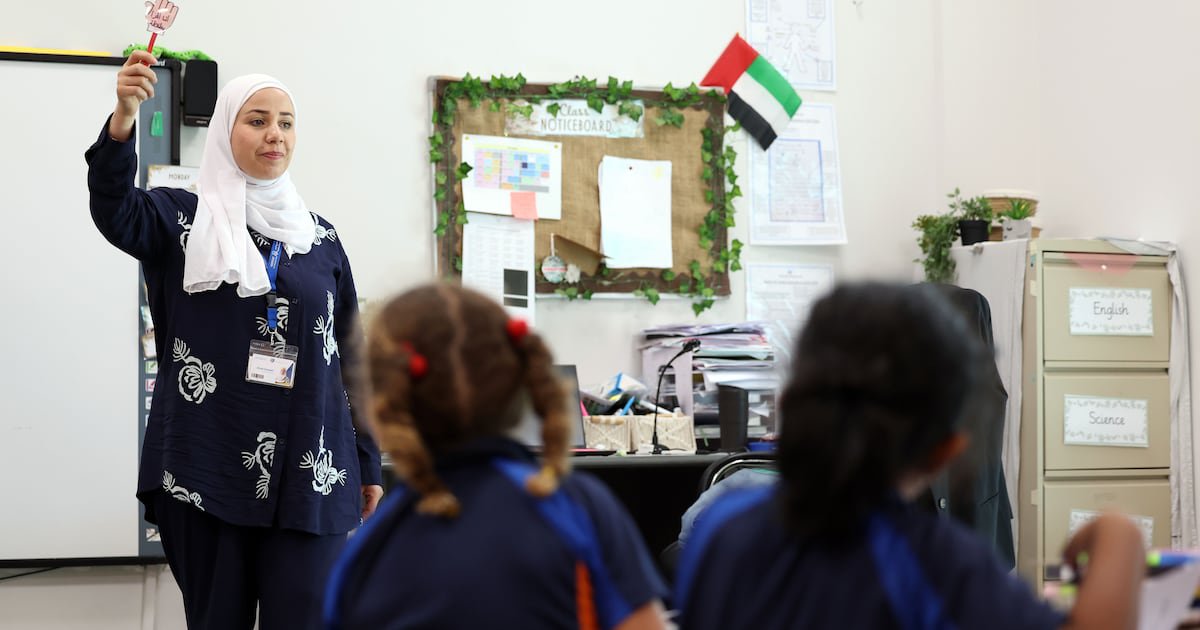
The UAE's Ministry of Education has introduced artificial intelligence as an official subject for public schools from kindergarten through grade 12 this academic year, alongside a plan to train 22,000 teachers to use AI in teaching, assessment and lesson planning. The initiative spans both public and private schools.
Despite the push, educators at several international schools say introducing AI to pupils does not mean putting more screens in front of them. Michael Connor, founding head of primary at Nord Anglia International School Abu Dhabi, and Jamie Efford, elementary principal and AI cluster lead at Dubai Schools Al Khawaneej, describe an approach for children under 12 built almost entirely around "unplugged" activities — stories, play, sorting exercises and group discussion — with no independent access to generative AI accounts.
From age 13, supervised use of approved AI tools begins, but personal or public ChatGPT accounts remain off-limits. Lisa Crausby, chief education officer at Gems Education, said the priority is teaching pupils to question, evaluate, improve or reject AI outputs, rather than simply training them to operate the tools.
The approach reflects a broader balancing act in UAE education: as AI becomes a core part of the national curriculum, schools are simultaneously trying to protect independent thinking and delay pupils' reliance on screens and generative tools until they are old enough to use them critically.