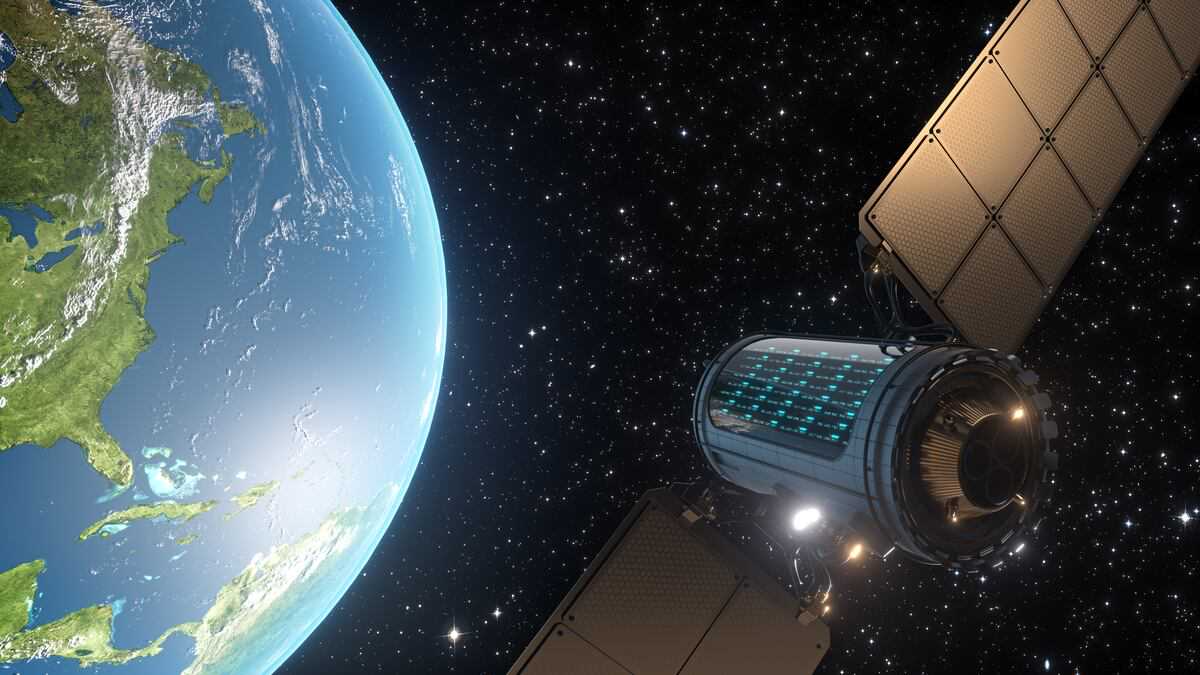
Google has sent artificial intelligence computing hardware into low Earth orbit aboard SpaceX's Transporter-18 mission as part of an initiative called Project Suncatcher, aimed at testing how machine learning workloads perform beyond the planet's atmosphere. The experiment is designed to answer a growing question in the tech industry: could space eventually host scalable AI infrastructure? satellites in low Earth orbit can generate up to eight times more solar power than equivalent panels on the ground, a factor that has made orbital computing increasingly attractive to technology firms grappling with the energy demands of AI. SpaceX chief executive Elon Musk has predicted that a functioning data centre in space could become reality by 2027, and has spoken of eventually harnessing "hundreds of terawatts" of computing power beyond Earth. Nvidia, meanwhile, unveiled its Space-1 Vera Rubin Module in March, a system intended to help bring AI compute capacity to orbital data centres.
Despite the enthusiasm, experts caution that serious engineering hurdles remain. Ariel Ekblaw, chief executive of the Aurelia Institute, said extreme cold, radiation exposure and the difficulty of upgrading hardware in orbit are among the biggest obstacles facing the concept. She noted that the rapid replacement cycle common in terrestrial data centres does not translate easily to space: swapping out Nvidia chips every six months, she said, would mean sending replacement hardware all the way into orbit each time.
The push toward orbital computing comes amid mounting opposition on Earth to new data centres, which communities increasingly resist over noise, land use and heavy electricity and water consumption — pressures that are prompting major technology companies to explore alternatives beyond the planet's surface.