Dubai Culture & History Travelogue: From the Creek to Today’s Towers
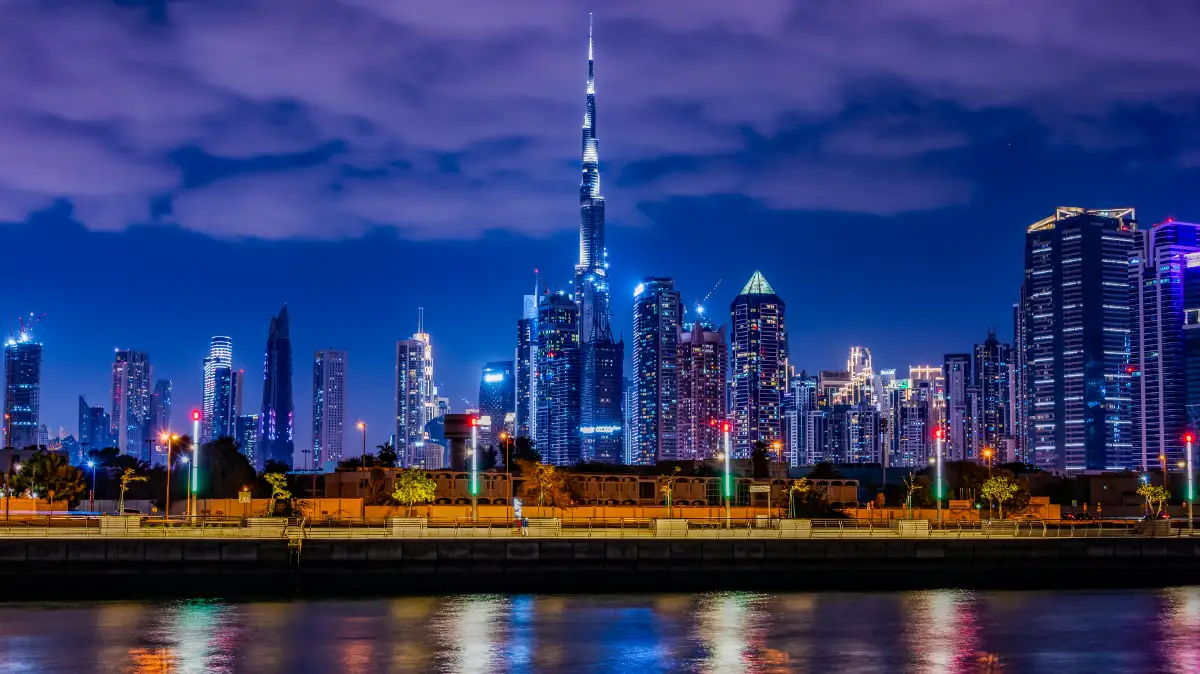
This is a quick introduction to Dubai—a dynamic city that rose from the Creek’s trading roots to a skyline of smart towers. In a few short paragraphs, you’ll get a rapid look at Dubai’s modern history, key sights, and practical travel notes.
- Pop. ~3.6M; Economy: trade, tourism, finance, logistics
- Key areas: Deira/Creek, Downtown, Marina, Jumeirah
- DXB Airport (Emirates hub); Metro Red & Green lines
- Weather: Oct–Apr best; summers very hot
- Payments: cards/Apple Pay; Nol card for transit
- Quick rules: modest dress at religious sites; alcohol only in licensed venues; respect Ramadan
Al Fahidi — Wind-Tower Alleys & Gypsum Heritage Houses
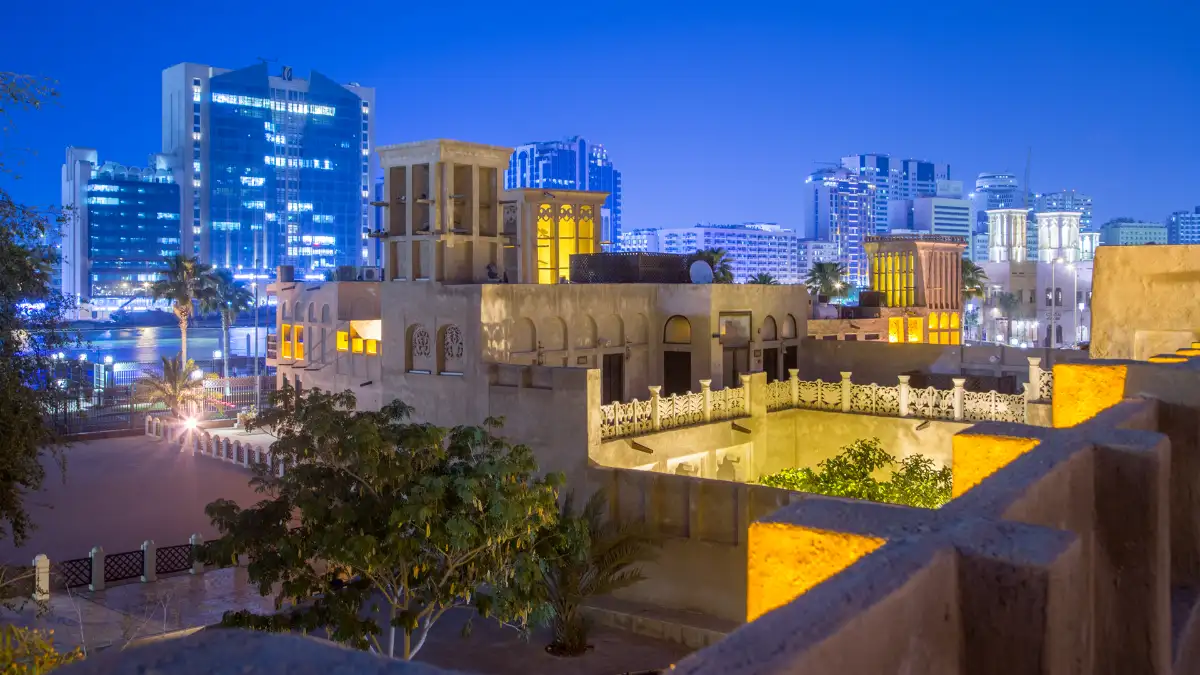
يقع حيّ الفهيدي التاريخي على ضفاف خور دبي وفي قلب البرّ، وهو المكان الذي تُرى فيه جذور المدينة الحديثة بالعين المجرّدة. تكوّن النسيج العمراني في أواخر القرن التاسع عشر حين بنى التجّار—ومنهم عائلات قدمت من بستك وجنوب إيران—بيوتاً ذات أفنية داخلية، وربطوها بأزقة ضيّقة تُسمّى «سِكّة» لتسري الريح ويخفّ وهج الشمس عن المارة. شُيّدت الجدران من المرجان والجصّ، وتُسند الأسقف أخشاب الساج والسدر، وتعمل أبراج الرياح (البارجيل) كرئات للبيت تلتقط النسيم من الأعلى وتدفعه إلى الغرف. من هذه التفاصيل البسيطة نفهم كيف كانت دبي تتنفّس بحلول محلية قبل ناطحات الزجاج والفولاذ. اقترب الحيّ في فتراتٍ لاحقة من الاندثار؛ هُدم جزء منه أثناء موجات التحديث، غير أن إصرار المهتمّين بالتراث وقرار الجهات المسؤولة بالحفاظ عليه أعاد الحياة لما تبقّى، فرُمِّمت البيوت واستعادت روحها. اليوم صار لكثيرٍ من الدور وظائف ثقافية: مركز التفاهم الثقافي يستضيف حوارات وغداءً تقليدياً، ومتحف القهوة ومتحف العملات يرويان جانباً من المهن والاهتمامات القديمة، كما تعرض صالات مثل XVA فنوناً معاصرة في أحضان العمارة التراثية. وفي كل عام يملأ مهرجان «سِكّة» للفنون الأزقّة بالألوان والأصوات. إذا مشيت صباحاً باكراً أو قبيل الغروب رأيت ضوءاً مائلاً على الجدران الجصّية، وظلال البارجيل، ورائحة القهوة من الأفنية، وصوت الأذان البعيد—مشهدٌ صادق لدبي ما قبل النفط: مدينةٌ ساحليةٌ نشأت من هذا الخور وتدرّجت بهدوءٍ إلى حاضرها. هذا ليس متحفاً خلف واجهات زجاجية؛ إنه نسيجٌ حيّ يعمل حتى الآن، ويهمس بأن فهم دبي لا يكتمل من دون الفهيدي.
📍 Address:
حي الفهيدي التاريخي, شارع الشيخ صباح الأحمد الجابر الصباح, بر دبی, الحمرية, دبی, امارات متحده عربی
✅ نکات مثبت
- An authentic, highly photogenic setting for photos and video—free, open-air, with small cafés and galleries around; early morning and near sunset give the best light and shadows.
❌ نکات منفی
- Midday is extremely hot and some lanes get crowded with tourists; some houses/galleries also keep limited visiting hours.
As you leave the wind-tower lanes, the Creek is just a few minutes away. Follow the Al Seef waterfront north to reach the Al Shindagha Museum and let the story of the sea and pearling come full circle.
Al Shindagha Museum — Maritime Trade & Pearling Story
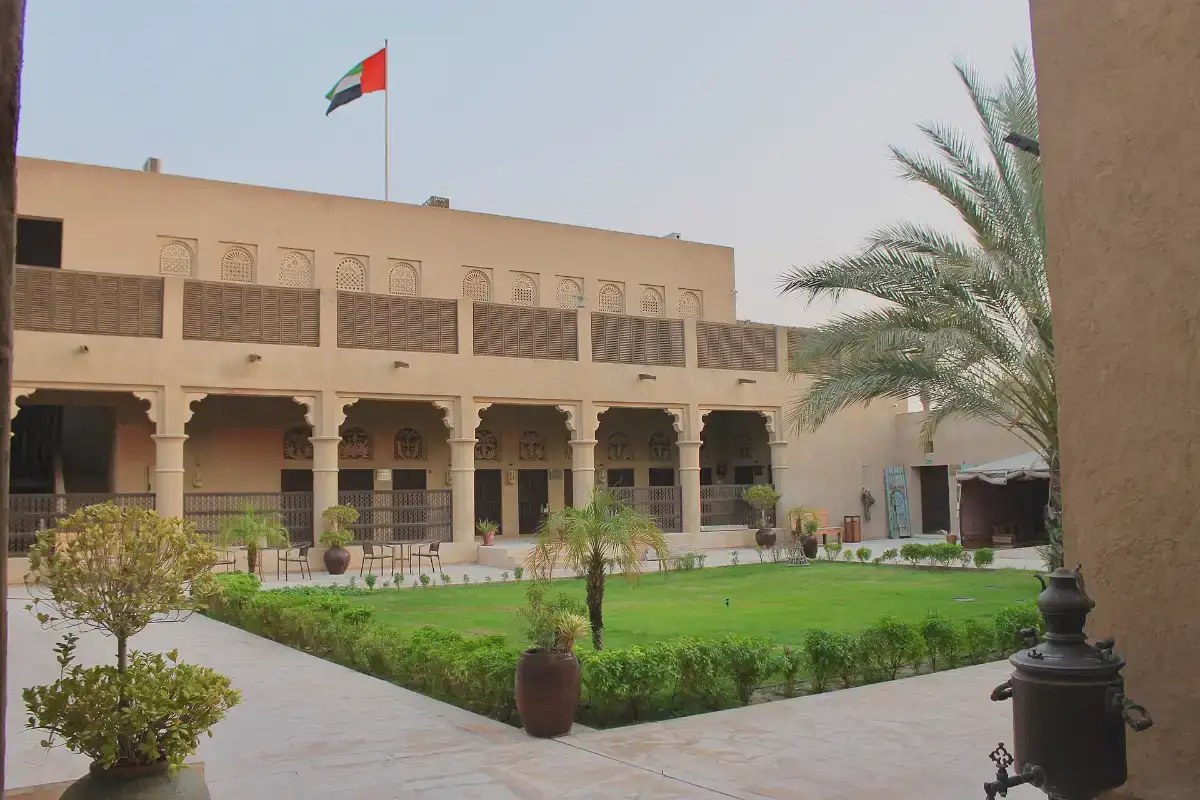
Al Shindagha Museum, set on the banks of Dubai Creek beside the House of Sheikh Saeed, is arguably the clearest place to grasp Dubai’s maritime history. A chain of restored wind-tower houses now functions as linked galleries. The visitor route works like a timeline: you begin with wooden dhows and lateen sails, move through seasonal voyages to India and East Africa, and see how the Gulf trade network lifted a small settlement into a busy port. In the pearling gallery, divers’ gear, foot stones, rope baskets and the haunting nahhām work songs bring the pre-oil economy to life. Short films and interactive rooms explain the boom-and-bust of pearls and the city’s pivot towards new forms of commerce—banking, shipping and logistics—before and after oil. Architecture is part of the lesson: wind towers, interlinked rooms and shaded courtyards demonstrate how traditional cooling worked long before air-conditioning. For a compact itinerary, pair Shindagha with a stroll through nearby Al Fahidi so the sequence of home → lane → creek → market clicks into place. Access is easy via the Metro Green Line (Al Ghubaiba Station), or a 10–12-minute waterfront walk along Al Seef. Photographers will love the angled morning/evening light on plaster walls with the Creek in the background.
📍 Address:
طريق الغبيبة, بر دبی, الشندغة, دبی, امارات متحده عربی
✅ نکات مثبت
- Coherent storytelling of Dubai’s maritime past in cool, restored galleries with engaging films and interactives; prime Creekside location near Al Fahidi; easy Metro access (Al Ghubaiba) and family-friendly, especially in summer.
❌ نکات منفی
- Ticketed; spread across multiple buildings with some walking between halls; weekends can be busy; occasional gallery closures for maintenance, and not all labels are available beyond Arabic/English.
Step out of the museum and the jetty is a few steps ahead; hop on an abra and in five minutes we’ll be across to Deira.
Deira — The Historic Heart of Dubai’s Trade: From the Gold and Spice Souks to
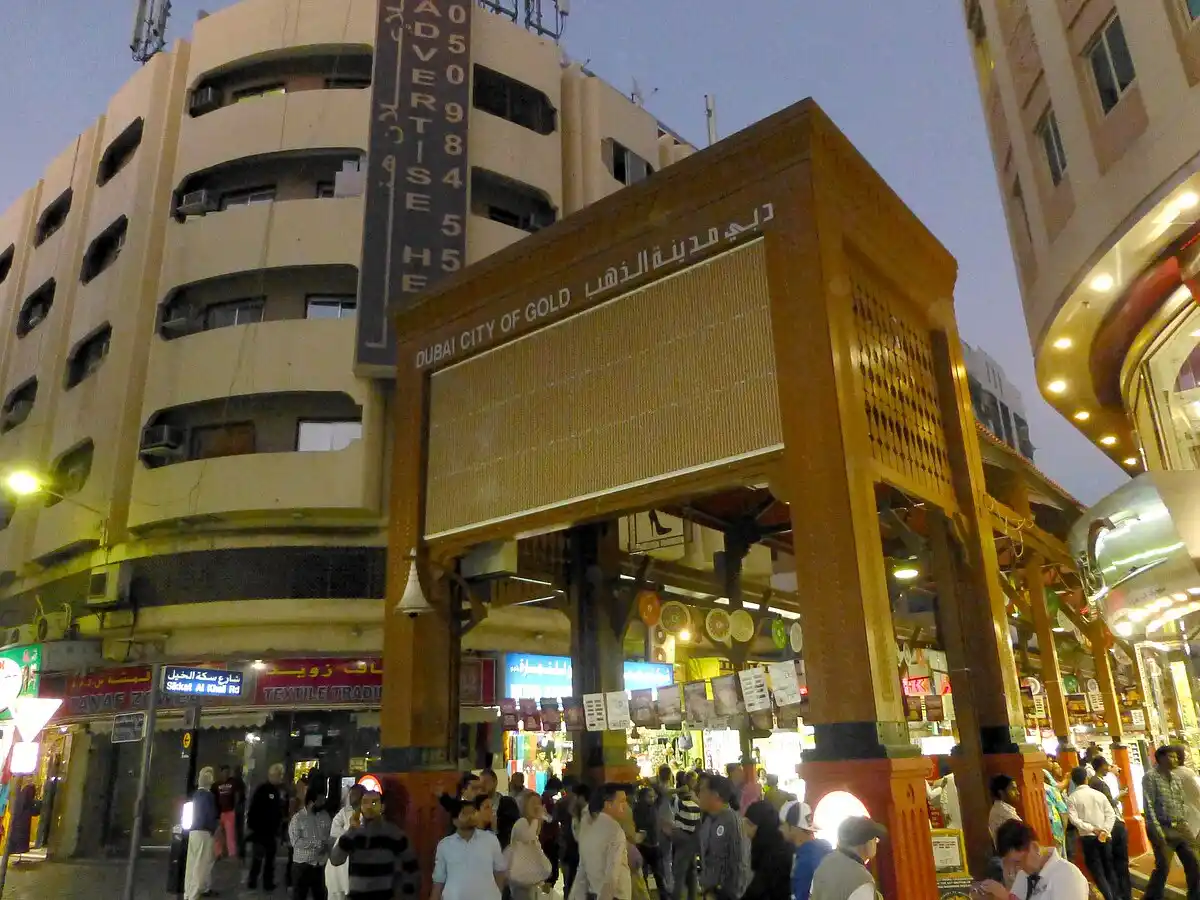
Deira is Dubai’s classic market district: narrow lanes, busy workshops and a constant drift of cardamom and saffron from the Spice Souk towards Dubai Creek. Start at the Gold Souk, where long corridors of glittering shopfronts sit next to small workshops—you can compare prices and workmanship before you buy. A short walk brings you to the Spice Souk for colorful baskets of spices, dates and Arabic tea—easy, authentic souvenirs. The atmosphere peaks from late afternoon into the evening. Getting there is simple: Metro Green Line (Al Ras or Gold Souq stations), or an abra across the Creek to Deira Old Souk. Haggling is expected; both cash and cards are widely accepted. For photographers, neon signage and gold reflections at night make striking frames.
📍 Address:
الرقة, شارع الرقة, ديرة, الكورنيش, المرقبات, دبی, امارات متحده عربی
✅ نکات مثبت
- Lively, authentic old-market vibe; huge variety (gold, spices, textiles, snacks) with competitive prices and bargaining; very easy access via Metro (Al Ras/Gold Souq) and abra; great for street photography and local feel.
❌ نکات منفی
- Weekend crowds and occasional pushy touts; very hot at midday; narrow lanes (limited stroller/wheelchair access); must double-check gold weight/purity and compare prices.
Leaving Deira’s market alleys with the spice scent behind, take the Green Line to BurJuman, switch to the Red Line along Sheikh Zayed Road—next stop: the Museum of the Future.
Museum of the Future — Iconic Architecture & Interactive Experience
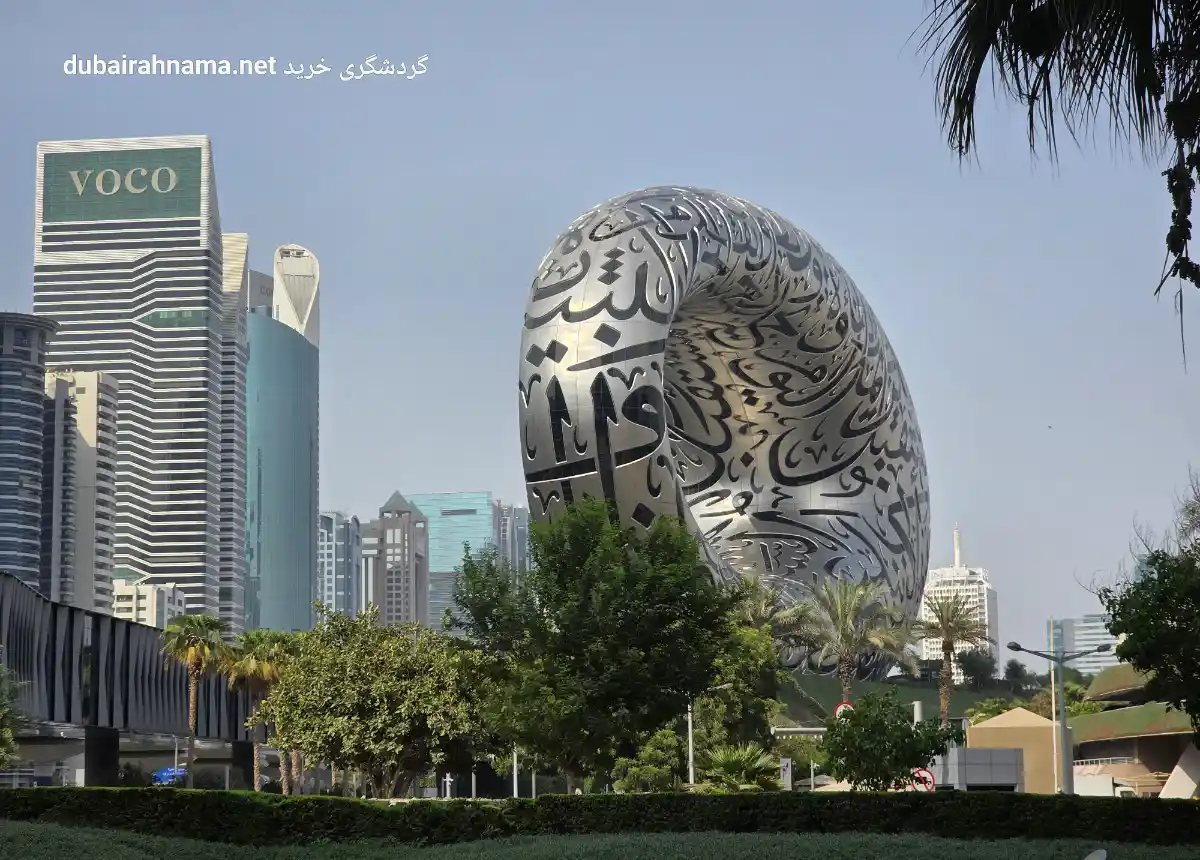
The Museum of the Future, a gleaming steel ring wrapped in Arabic calligraphy, sits on Sheikh Zayed Road like something dropped from space—a seamless, column-free building that changes with the time of day: a mirror for sky and city by day, lines of light that glow from afar by night. Inside, it feels less like a classical museum and more like a narrated journey. Instead of vitrines and labels, themed floors unfold through interactive scenarios—future cities and mobility, energy and space, human well-being and the nature–technology relationship. On one level you might strap into a virtual flight capsule and see Earth from orbit; on another you pass through multi-sensory installations that work with sound, scent and touch, making big ideas—from the circular economy to vertical farming—tangible. In the innovation lab, real prototypes of emerging tech are on show: service robots, smart materials, 3D printing and tools not yet on the market. A materials library stacks hundreds of samples for designers and students to handle—future literally under your fingertips. Along the route, calligraphed quotations about hope, knowledge and innovation appear again and again, the same phrases you read on the outer skin—turning the building itself into a piece of architectural writing.
Details, Access & Visitor Info – Museum of the Future📍 Address:
متحف المستقبل, شارع مركز التجارة, مركز التجاري 2, المركز التجاري, دبی, امارات متحده عربی
✅ نکات مثبت
- Iconic, photogenic architecture; immersive, multi-sensory storytelling instead of traditional cases; easy access via Emirates Towers Metro; great for families and tech/design enthusiasts.
❌ نکات منفی
- Tickets are relatively expensive with limited slots (advance booking needed); some sections may be temporarily closed; guides are mostly in Arabic/English, but Persian-speaking interpreters can be arranged for private/pre-booked tours.
Leaving the museum’s glowing ring, the Dubai Frame comes into view; take the Red Line to Al Jafiliya, then enter via Zabeel Park (Gate 4)—next stop: Dubai Frame.
Dubai Frame — A Window Between Past and Future
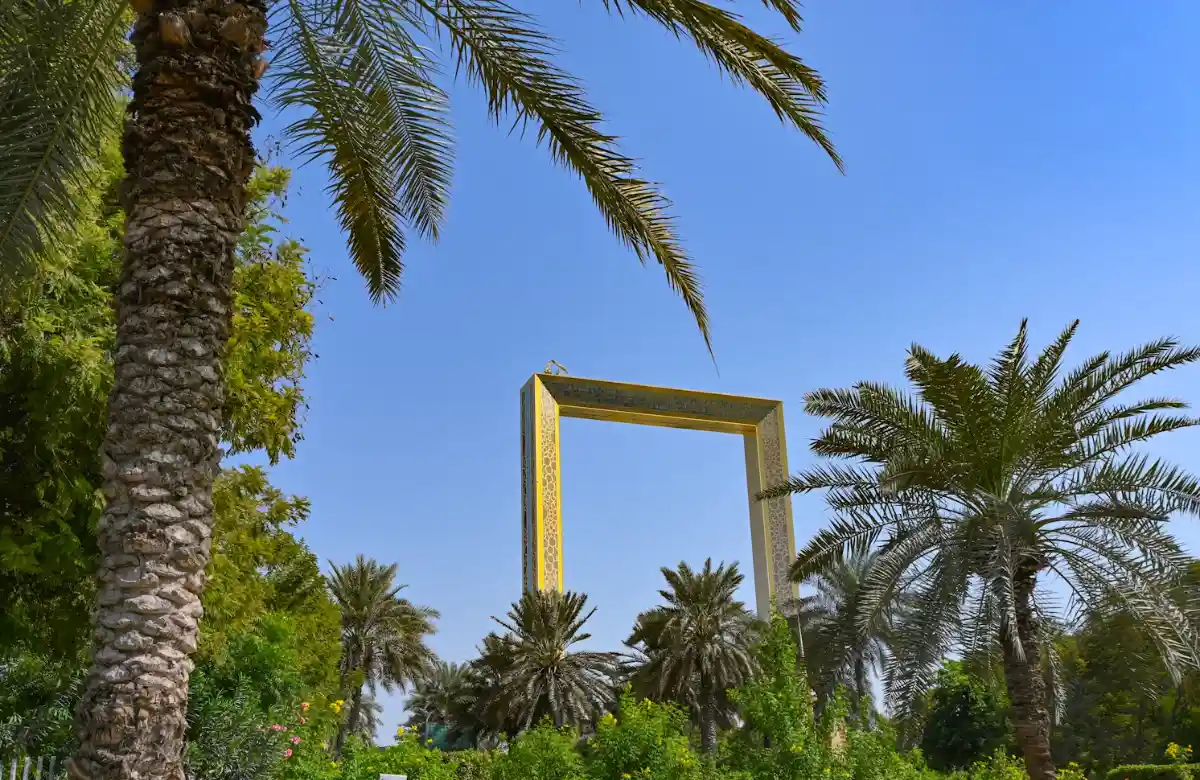
The Dubai Frame rises from Zabeel Park like a golden rectangle, offering a rare two-sided panorama: the historic quarters of Bur Dubai and Deira on one side, and Sheikh Zayed Road’s modern skyline on the other. A glass elevator takes you up to the sky bridge with sections of smart glass flooring—opaque at first, then turning transparent at a tap for a thrilling look straight down. The ground-level gallery condenses Dubai’s growth story with images and models, and the shaded park paths make for a relaxed exit stroll. Best time to visit is late afternoon into evening for cooler air and dramatic night lighting.
📍 Address:
Jogging track, 12e شارع, بر دبی, الکرامه, دبی, امارات متحده عربی
✅ نکات مثبت
- Unique two-sided panorama (old/new Dubai), thrilling glass-floor sky bridge for photos, easy access via Al Jafiliya Metro and Zabeel Park, family-friendly and doable in a short visit.
❌ نکات منفی
- Tickets relatively pricey for the visit length, elevator queues at peak times, glass floor may be uncomfortable for some, distant views depend on weather/dust.
Stepping down from the Dubai Frame, shopping and entertainment are next; take a short taxi ride or the Red Line to Burj Khalifa/Dubai Mall and follow the air-conditioned walkway straight into Dubai Mall.
Burj Khalifa — The World’s Tallest Building; Dubai’s Highest Observation Decks
Burj Khalifa (828 m) defines Dubai’s skyline, and the visit begins inside Dubai Mall. Follow the At The Top signs, pass through light tunnels and short exhibits, then ride the high-speed elevators—within seconds you’re on Levels 124/125, where the city spreads beneath you and both the desert and the Gulf run to the horizon. With a separate ticket you can continue to Level 148, a quieter, more premium floor with floor-to-ceiling windows and light refreshments. The best time is sunset into night: golden light on the towers, then the Dubai Fountain and the city lighting up one by one. To avoid queues, prebook a timed slot and arrive 30–45 minutes early. On the decks, keep your camera ready: a wide lens for sweeping horizons and a normal lens for city frames (tripods are usually not allowed). If the day is hazy, wait for night—the lights give better contrast. After descending, it’s a short walk to the Dubai Fountain, which performs roughly every 30 minutes in the evening. For a calmer alternative, At.mosphere restaurant (Level 122) offers similar views in a dining setting (reservation required). Getting there is simple: Red Line Metro to Burj Khalifa/Dubai Mall station, then the air-conditioned walkway to the entrance. Altogether, a Burj Khalifa visit is more than “going up”—it’s a complete frame of today’s Dubai.
Details, Access & Visitor Info — Burj Khalifa📍 Address:
At.Mosphere Burj Khalifa, 1, شارع الشيخ محمد بن راشد, وسط مدينة دبي, برج خلیفه, وسط مدينة دبي, دبی, امارات متحده عربی
✅ نکات مثبت
- Unrivaled shopping and dining with international brands and numerous cafés, plus family attractions like the Aquarium & Underwater Zoo, ice rink, and VR experiences for all ages; direct access to the Dubai Fountain and Burj Khalifa from inside the complex, along with climate-controlled walkways and easy connection to the Red Line Metro at Burj Khalifa/Dubai Mall station for quick, simple transport.
❌ نکات منفی
- Very large → lots of walking; the Aquarium and Burj visits usually require reservations/queues and tickets are relatively expensive.