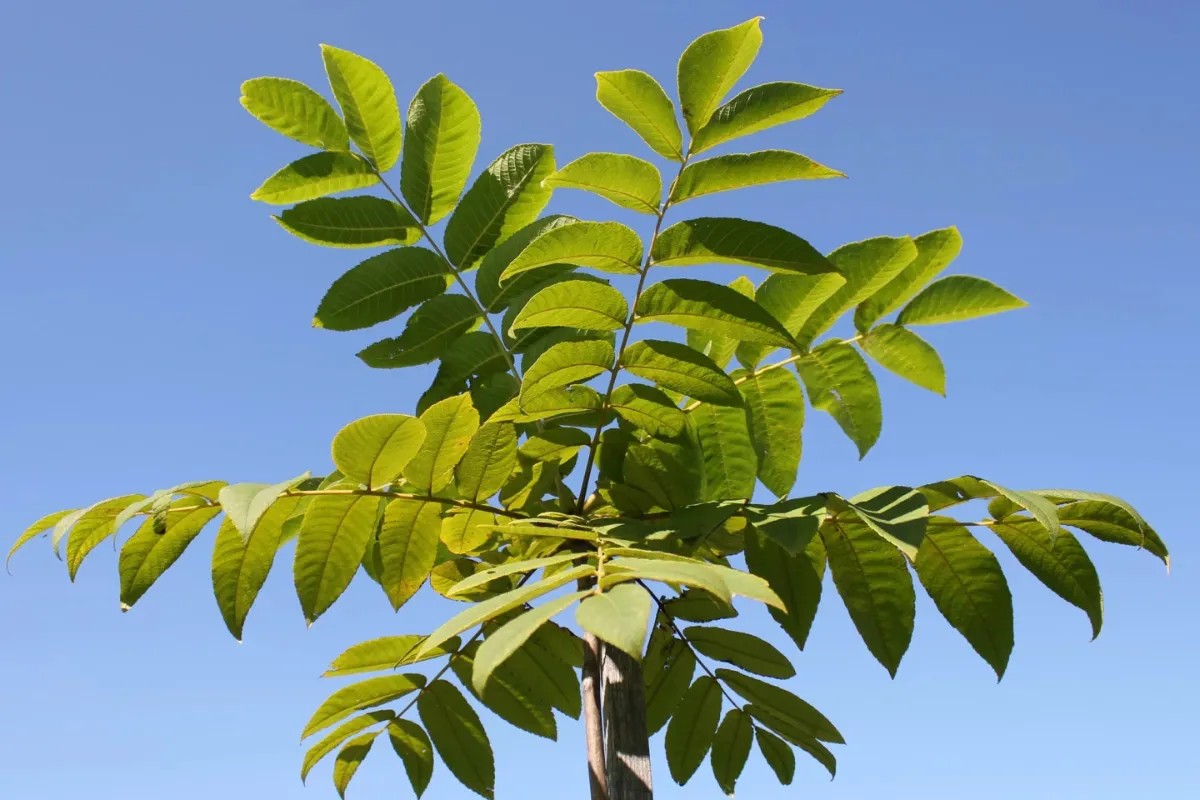
Japanese researchers have discovered a powerful and natural compound in walnut leaves that could serve as a replacement for harmful chemical herbicides in agriculture.
Synthetic herbicides, which are strong and environmentally incompatible, are certainly among those substances that should be avoided whenever possible. Now, a group of researchers is working on creating a green and natural alternative derived from the leaves of a humble and familiar plant: the walnut tree.
Scientists have known for years that large plants do not grow near the Manchurian walnut tree (Juglans mandshurica). This phenomenon, known as allelopathy, is a defensive mechanism in which a plant releases biochemical substances to inhibit the growth of competing plants around it.
Other types of walnut trees also exhibit allelopathy, and the primary chemical involved in this process is called juglone. However, in the case of the Manchurian walnut tree, which possesses a unique power in allelopathy, the main chemical involved in this phenomenon had remained unknown until now.
To solve this mystery, a group of scientists from Kyushu University in Japan collaborated with colleagues from Juntendo University in Japan and Chulalongkorn University in Thailand. The researchers simulated the natural conditions of walnut leaf litter on soil in the laboratory, extracted various compounds from the leaves, and then tested each one on filter papers containing tobacco seeds.
The results of the research were surprising: the most effective compound in inhibiting plant growth was a chemical called 2Z-decaprenol; a compound that, contrary to expectations, showed no trace of juglone. Interestingly, this research marks the first time that 2Z-decaprenol has been identified as an allelochemical; this natural compound has a remarkable ability to halt the growth of other plants.