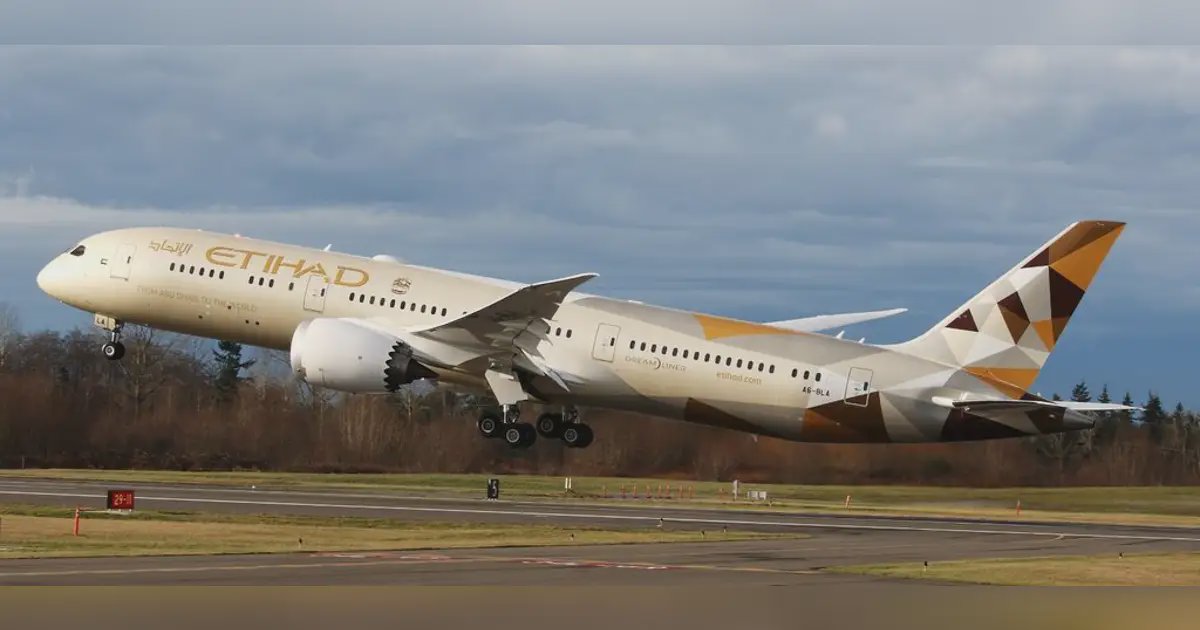
Etihad Airways has set a new target of carrying 37 million passengers annually by the end of the decade, up from roughly 25 million today, as the Abu Dhabi-based carrier pushes ahead with one of the most aggressive expansion plans in its history. Chief executive Antonoaldo Neves said passenger numbers have more than doubled since 2022, when the airline carried around 10 million travellers, while its network has grown from 70 to more than 130 destinations worldwide. To support that growth, Etihad is adding roughly 20 aircraft a year to a fleet that now numbers close to 200, backed by investment of nearly $2 billion. The airline currently employs about 14,000 people from more than 150 nationalities and plans to hire around 2,000 more annually, including through pilot-training programmes aimed at developing Emirati aviation talent. Seat capacity has nearly doubled in three years, climbing from 6.4 million to 12.6 million seats, while cargo operations now move about 700,000 tonnes of freight a year. Neves also pointed to Etihad's stopover programme, which encourages transit passengers to spend time in Abu Dhabi before continuing their journey and now brings in roughly 310,000 visitors annually. That tourism push dovetails with Abu Dhabi's own ambition of attracting 40 million visitors a year by 2030, positioning Etihad's fleet and network growth as a direct driver of the emirate's wider connectivity and tourism strategy rather than a standalone commercial target.
Etihad Airways Sets Sights on 37 Million Passengers a Year by 2030
Summary: Etihad Airways has set a new target of carrying 37 million passengers annually by the end of the decade, up from roughly 25 million today, as the Abu...